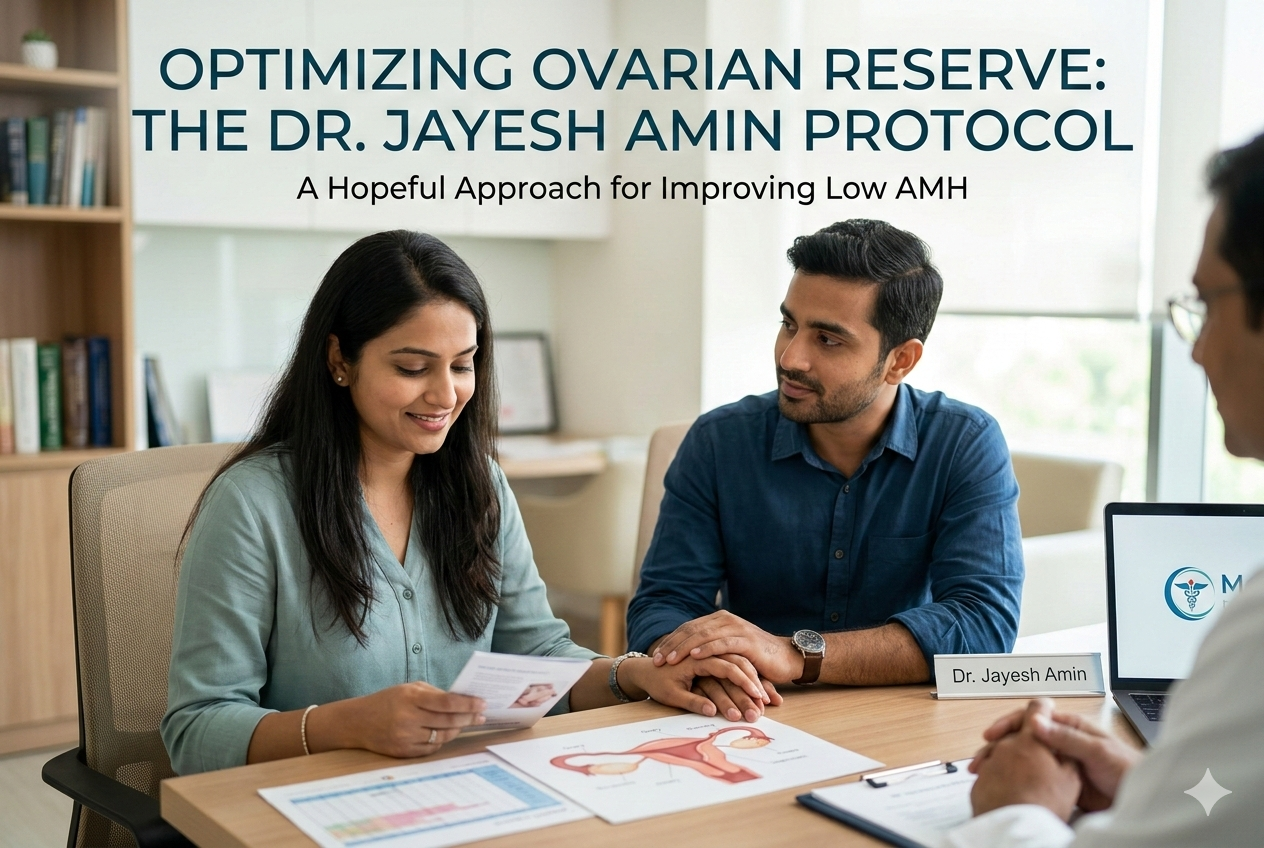
A diagnosis of Low AMH (Anti-Müllerian Hormone) can feel overwhelming, especially if you are planning a pregnancy. Often referred to as “low ovarian reserve,” it essentially means the egg count is lower than expected for your age.
While you cannot “create” new eggs, clinical experience from experts like Dr. Jayesh Amin suggests that you can significantly improve the quality of the remaining eggs and optimize the reproductive environment through targeted nutrition and lifestyle shifts.
Optimizing Ovarian Reserve: The Dr. Jayesh Amin Protocol for Improving Low AMH
A diagnosis of Low AMH (Anti-Müllerian Hormone) can feel overwhelming, especially if you are planning a pregnancy. Often referred to as “low ovarian reserve,” it essentially means the egg count is lower than expected for your age.
While you cannot “create” new eggs, clinical experience from experts like Dr. Jayesh Amin suggests that you can significantly improve the quality of the remaining eggs and optimize the reproductive environment through targeted nutrition and lifestyle shifts.
Understanding the Dr. Jayesh Amin Clinical Approach
Dr. Jayesh Amin’s protocol focuses on the “Soil and Seed” theory. If the “seeds” (eggs) are limited, we must make the “soil” (your body’s internal environment) exceptionally fertile. By reducing oxidative stress and improving mitochondrial function, we can enhance fertility outcomes even with a low AMH count.
- The Fertility Diet: Fueling Your Follicles
Nutrition is the cornerstone of the Amin protocol. The goal is to reduce inflammation and balance hormones.
- The Power of Proteins: Incorporate high-quality plant proteins (lentils, chickpeas, quinoa) and lean proteins like organic poultry or omega-3 rich fish.
- Antioxidant-Rich “Rainbow” Foods: Oxidative stress is the enemy of egg quality. Load up on blueberries, spinach, walnuts, and pomegranate.
- Healthy Fats (The Hormone Builders): Avocados, extra virgin olive oil, and flaxseeds provide the building blocks for reproductive hormones.
- Eliminate “Fertility Blockers”: Minimize processed sugars, trans fats, and excessive caffeine, which can spike insulin and disrupt ovulation.
When dealing with low AMH, more is not always better. High-intensity interval training (HIIT) can sometimes raise cortisol, which may negatively impact egg maturation.
- Moderate Cardio: 30 minutes of brisk walking or swimming 5 days a week improves blood flow to the pelvic organs.
- Fertility Yoga: Specific poses like Baddha Konasana (Butterfly Pose) help stimulate blood circulation to the ovaries.
- Strength Training: Light weightlifting twice a week helps maintain insulin sensitivity, which is vital for hormonal balance.
- The 8-Hour Sleep Rule: Melatonin, the sleep hormone, is also a powerful antioxidant for the fluid surrounding your eggs.
- Stress Management: Chronic stress diverts blood flow away from the reproductive system. Practice mindfulness or guided meditation.
- Supplements (Under Supervision): Dr. Amin often recommends Coenzyme Q10 (CoQ10), Vitamin D3, and Melatonin to support mitochondrial health in eggs.
| Category | Focus Area | Recommended Action |
| Diet | Inflammation Control | Mediterranean-style diet; high antioxidants. |
| Exercise | Blood Circulation | 150 mins/week of moderate activity (Walking/Yoga). |
| Supplements | Egg Quality | CoQ10 (Ubiquinol), Vitamin D, Folic Acid. |
| Habits | Detoxification | Quit smoking and limit plastic (BPA) exposure. |
Low AMH is a number, not a final verdict. By following a structured clinical protocol focused on cellular health, many women successfully achieve pregnancy either naturally or through assisted technologies like IVF.