Clinic Favicon Logo

Dr Jayesh Amin

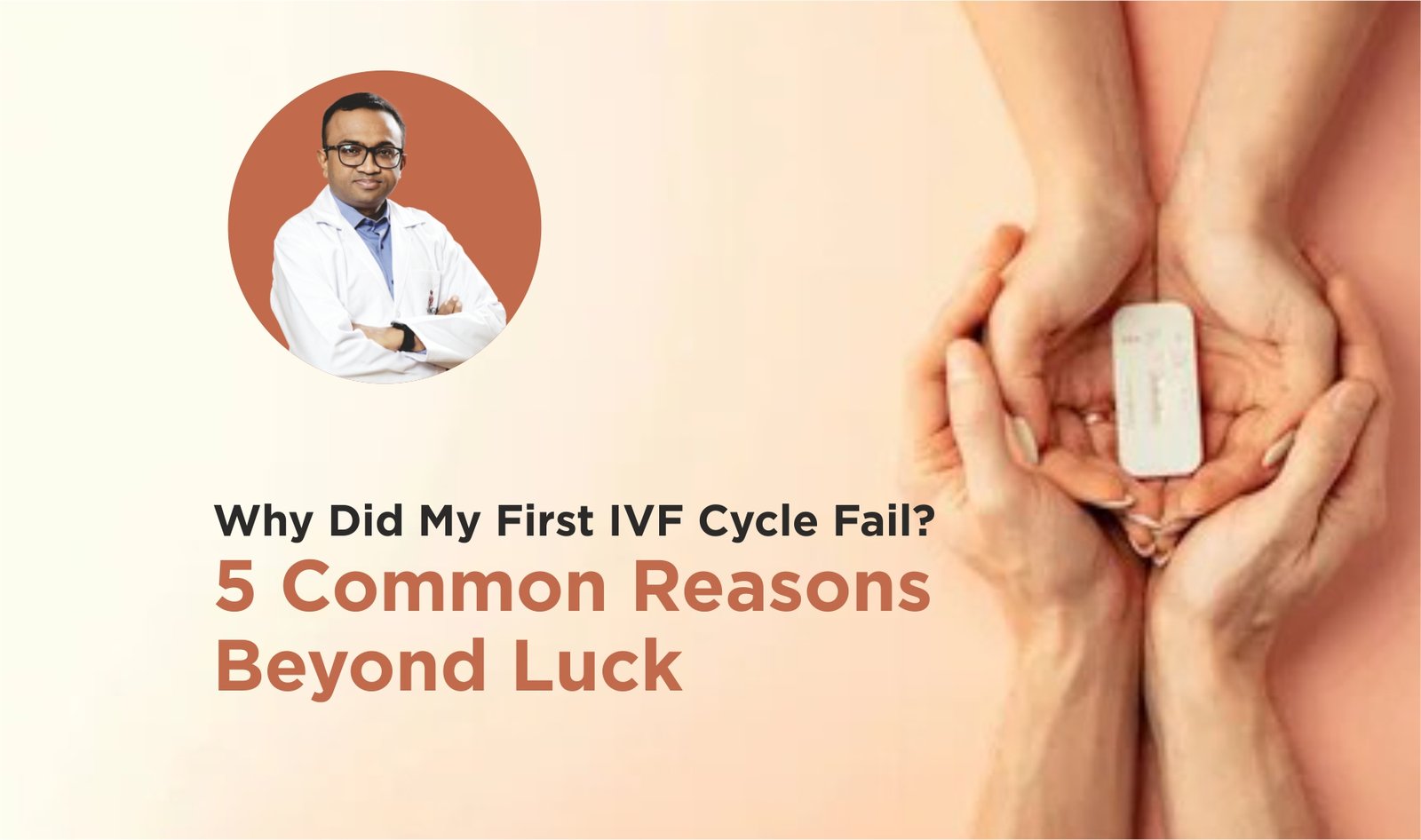
Why Did My First IVF Cycle Fail? 5 Common Reasons Beyond Luck

IVF Cycle Fail Blog

Going through an IVF cycle requires courage, hope, and emotional strength. When the first attempt fails, many couples ask the same painful question: Why Did My First IVF Cycle Fail? 5 Real Reasons & What To Do Next. In this article, we’ll explore why did my first IVF cycle fail, 5 real reasons and what to do next, so you can feel more prepared for the journey ahead.

“Why did my first IVF cycle fail?”

The truth is — IVF failure is rarely about bad luck. There are medical, biological, and sometimes technical reasons behind it. Understanding these reasons helps you plan a stronger, more successful second attempt.

At leading fertility centers like Nova IVF Fertility, specialists carefully analyze every failed cycle to improve future success rates.

Let’s understand the 5 most common reasons in simple terms.


1. Embryo Quality Issues

The most common reason for IVF failure is poor embryo quality.

Even if eggs and sperm look healthy, sometimes:

  • The embryo may have genetic abnormalities

  • The embryo may stop developing after a few days

  • The embryo may not be strong enough to implant

As women age (especially after 35), egg quality naturally declines. This increases the chances of chromosomal issues.

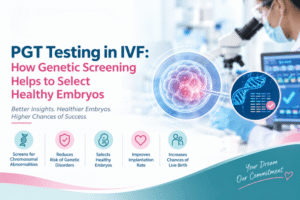
Advanced techniques like blastocyst transfer and genetic testing (PGT) can help improve success in the next cycle.


2. Implantation Problems (Uterine Factors)

Sometimes the embryo is healthy, but it does not implant properly in the uterus.

Possible reasons:

  • Thin endometrial lining

  • Uterine fibroids or polyps

  • Hormonal imbalance

  • Hidden infections

  • Immune-related issues

A detailed uterine evaluation before the next IVF cycle can identify these problems.

Experts like Dr. Jayesh Amin are known for handling complex implantation failures using advanced diagnostic approaches.


3. Sperm Quality Issues

IVF is not only about egg quality.

Poor sperm health can lead to:

  • Weak embryo development

  • Fertilization failure

  • Poor blastocyst formation

Even when sperm count is normal, DNA fragmentation may affect embryo growth.

Advanced sperm testing and techniques like ICSI can improve outcomes in repeat cycles.


4. Poor Ovarian Response

Some women produce fewer eggs during stimulation.

This can happen due to:

  • Low AMH levels

  • Age-related decline

  • Previous ovarian surgery

  • Hormonal disorders

Fewer eggs reduce the number of embryos available, which lowers overall chances.

A personalized stimulation protocol can improve egg yield in the next cycle.


5. Lab & Protocol Factors

IVF success depends heavily on:

  • Embryology lab quality

  • Freezing techniques

  • Hormone timing

  • Medication protocol

A well-equipped IVF lab and experienced fertility team significantly improve outcomes.

This is why choosing the right IVF specialist matters.


Is First IVF Failure Common?

Yes.

Globally, IVF success rate per cycle ranges between 40–60% depending on age and medical condition. This means many couples need more than one cycle.

Failure does NOT mean:

  • You cannot become pregnant

  • Your body cannot carry a baby

  • IVF will never work for you

It simply means the strategy needs adjustment.


What Should You Do After First IVF Failure?

Instead of repeating the same cycle, a detailed review is important:

✔ Embryo grading analysis
✔ Hormone level review
✔ Uterine cavity scan
✔ Immunological testing (if needed)
✔ Genetic screening discussion

A customized plan increases success in the next cycle.


Why Expert Evaluation Matters

When IVF fails, it becomes a medical puzzle. The right specialist looks deeper — beyond routine treatment.

Dr. Jayesh Amin is one of India’s leading IVF doctors for complex, failed, and self-cycle cases. He is known for:

  • Handling repeated IVF failures

  • Treating low AMH and poor ovarian response

  • Managing implantation failure cases

  • Personalized stimulation protocols

  • Advanced reproductive immunology evaluation

Couples from across India trust his expertise for second opinions and advanced IVF strategies.


Emotional Healing Is Also Important

IVF failure is not just medical — it is emotional.

It’s okay to:

  • Feel disappointed

  • Take a short break

  • Ask questions

  • Seek counseling

A supportive fertility team understands this journey.


Final Thoughts

Your first IVF failure does not define your parenthood journey.

With proper diagnosis, advanced techniques, and experienced guidance, many couples conceive successfully in their second or third cycle.

The key is not luck — it is right diagnosis + right protocol + right doctor.

If you are searching for answers after IVF failure, expert evaluation can make all the difference.

Frequently Asked Questions

An IVF specialist can help you understand your options in Ahmedabad. Ask about qualifications, registration and fees before choosing.

Unsuccessful IVF cycles do not necessarily mean that all treatment options have been exhausted. A fertility specialist can review your previous IVF records, including ovarian response, embryo development, and uterine health, to identify factors that may have affected the outcome.

If donor eggs or sperm have been recommended, a second opinion can help you better understand the medical reasons and explore suitable treatment options. Every patient’s situation is different, and the possibility of success depends on individual medical factors.

Yes — couples across India and abroad consult online with our fertility expert to review reports and receive a personalised plan. This allows you to get expert guidance from Dr. Jayesh Amin regardless of your location.

Yes, we provide egg freezing treatment in Ahmedabad with evidence-based protocols and transparent care. Our centre offers safe, evidence-driven egg freezing using protocols designed to optimise egg quality with minimal discomfort. Egg freezing is offered at [VERIFY: clinic]. Risks and limitations are explained at consultation.

Many couples are told they need other options. With the right diagnostics and timing, that’s often not the case. Our goal is simple: conception with your own genetics whenever science allows.

Reports show numbers. Biology shows behavior. Even when everything appears fine, subtle differences in timing, hormonal response, or embryo development can influence results. Each failed cycle provides information. When that data is reviewed properly, the next plan is sharper and more targeted.

Dr. Amin believes every couple deserves the chance to have a baby that is genetically their own. Age alone does not decide outcome. What matters is how the ovaries respond, how embryos develop, and how the body supports implantation. Pregnancy chances decline with age; your doctor will discuss realistic expectations. Donor is considered only when truly necessary.

We do not just repeat treatment. We study it. Every cycle is reviewed in depth to understand what worked, what did not, and why. The next plan is then built around your body’s specific response, not a generic formula.

Preimplantation genetic testing (PGT) checks embryos for certain chromosomal or inherited genetic conditions before transfer. PGT-A screens for differences in chromosome numbers, while PGT-M may be used for specific inherited genetic conditions. Whether testing is appropriate depends on individual medical and family history. PGT-A is not recommended routinely for every IVF patient and does not guarantee pregnancy.

A personalized IVF plan is developed according to each patient’s age, fertility history, ovarian reserve, sperm health, and previous treatment results. Based on these findings, the fertility specialist may recommend suitable treatment protocols, medications, monitoring, and embryo transfer options. The goal is to provide care tailored to individual medical needs while explaining realistic expectations, risks, and limitations.

A recommendation to consider donor eggs or sperm depends on factors such as age, ovarian reserve test results, response to stimulation and embryo development. A second opinion and a review of previous records can help you understand the reasoning behind a recommendation. Decisions about using your own or donor gametes are made together by you and your treating doctor. Treatment with your own gametes does not succeed for every patient. Donor options are used only when there is a clear, proven medical reason, never as the first solution.

The first step is a detailed case review. We go through previous reports, stimulation charts, embryo grading, and transfer history. This helps identify patterns and possible gaps, giving us the clarity to plan differently, not just try again.

The number of cycles needed varies widely. Some people conceive in the first cycle, others need several cycles, and some do not conceive despite treatment. Age and the cause of infertility are the main factors. Your doctor can discuss realistic expectations after reviewing your tests.

Complex simply means the reason for failure is not clear through standard testing. These cases often require deeper evaluation, such as hormonal balance, uterine environment, and sometimes genetic factors. With the right assessment, further tests may help clarify why earlier cycles did not succeed; results cannot be guaranteed.

Yes. Many of our patients travel from across India and abroad. We offer Out-of-town patients can request a care coordinator for travel planning. From arrival to treatment to follow-up, everything can be planned in advance so your journey remains smooth and stress-free.

Choose based on clarity, not claims. Ask how they review past failures, how decisions are explained, and how they determine when donor options are truly necessary. Even if you do not go ahead with Dr. Amin, make sure your doctor walks you through the why behind every step, not just the what. A safe fertility journey is one where you understand your plan, your risks, and your options clearly and calmly. That clarity alone can change outcomes.