If you are considering In Vitro Fertilization (IVF), the first question on your mind is likely: “Will it work for me?” While many factors play a role, the IVF success rate by age remains the most significant predictor of a healthy pregnancy and live birth.
This article provides general information about IVF success rates by age and the factors that may influence treatment outcomes. Understanding these statistics can help patients set realistic expectations and make informed decisions about their fertility treatment options. Individual IVF outcomes may vary, and no specific result can be guaranteed.
Why Does Age Matter in IVF?
The link between age and fertility isn’t just about the number of eggs; it’s about egg quality. Women are born with a finite number of eggs. As time passes, the “ovarian reserve” diminishes, and the remaining eggs are more likely to have chromosomal abnormalities.
When we look at the in vitro fertilization success rate, we are essentially looking at the likelihood of finding a healthy, genetically normal embryo that can result in a successful live birth.
IVF Success Rates by Age: Understanding the Trends
IVF success rates vary depending on age, ovarian reserve, egg and sperm quality, and individual medical conditions. When using one’s own eggs, the likelihood of success generally decreases with advancing age. The information below describes general trends and does not represent Dr. Jayesh Amin’s clinic-specific results.
1. Under 35 Years
IVF outcomes are generally more favorable in this age group when using one’s own eggs. However, individual results vary, and pregnancy or live birth cannot be guaranteed.
2. Ages 35 to 37
IVF success rates may begin to decline as reproductive age increases. A fertility evaluation can help identify factors that may influence treatment outcomes.
3. Ages 38 to 40
The likelihood of IVF success using one’s own eggs generally decreases with age. Ovarian reserve, embryo quality, and other medical factors should be considered when planning treatment.
4. Ages 41 to 42 and Beyond
IVF success rates using one’s own eggs are generally lower at older reproductive ages. Depending on individual circumstances, a fertility specialist may discuss different treatment options, including donor eggs where appropriate.
Important: These are general age-related trends, not guaranteed outcomes. Individual treatment decisions should be made following consultation with a qualified fertility specialist.
Factors That Can Boost Your IVF Odds
While age is a major factor, your likelihood of success can be improved through modern technology and lifestyle changes:
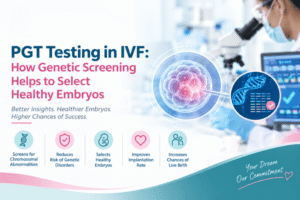
PGT-A (Preimplantation Genetic Testing): PGT-A is used during IVF to screen embryos for abnormalities in chromosome number. Research suggests it may reduce miscarriage risk in some circumstances, but it has not been proven to improve overall live birth rates for all patients or age groups. Its potential benefits, limitations, and risks should be discussed with a fertility specialist based on individual medical needs.
Cumulative Success: IVF treatment may require multiple cycles. Research indicates that the cumulative chance of achieving a live birth can increase over successive IVF cycles. However, outcomes vary depending on age, infertility diagnosis, previous treatment history, and individual medical factors. Published success rates represent population-level estimates and do not guarantee an individual outcome.
Lifestyle Optimization: Maintaining a healthy BMI, quitting smoking, and managing stress can improve the hormonal environment for implantation.
How Successful is IVF for You?
Every individual is different. Factors like your AMH levels (ovarian reserve) and your partner’s sperm health are just as vital as your birth year. Using an IVF calculator success tool or consulting with a specialist like Dr. Jayesh Amin can give you a personalized roadmap.
Conclusion
Understanding the IVF success rate by age is about preparation, not discouragement. With the right technology and expert care, the dream of parenthood is more achievable than ever before.
Ready to start your journey? Visit Dr. Jayesh Amin IVF today for a personalized fertility consultation and Book a consultation to discuss your situation.