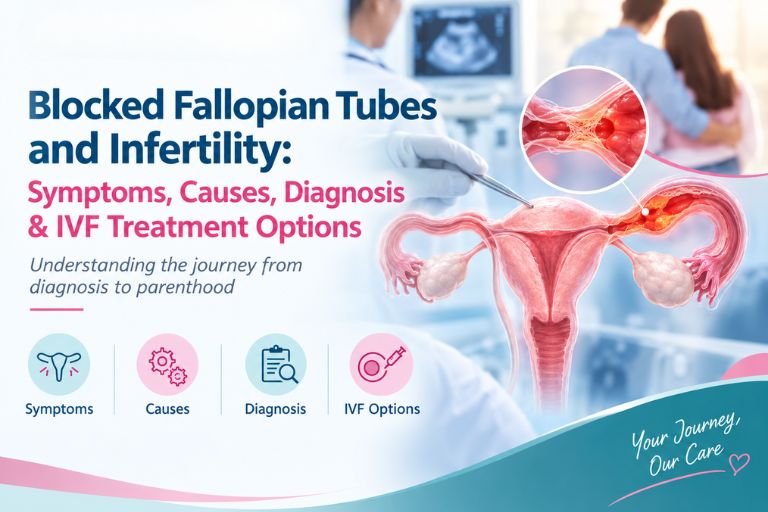
The fallopian tubes are very important for the natural conception to take place. This is because the fallopian tube is where the egg and sperm meet and Fertilisation takes place.. In case there is a blockage in any one of two or both fallopian tubes, then fertilisation is not possible through the blocked tube.
It is important for all women who are planning to conceive to be aware of the possibility of blocked fallopian tubes, causes & IVF treatment options.
What Are Fallopian Tubes and Why Are They Important?
The fallopian tubes connect the ovaries to the uterus. Each month, a single tube hosts a very crucial event:
- Egg released from the ovary
- Sperm and egg meet inside the tube
- Fertilized egg travels to the uterus
A blockage might affect this whole process. In case of blockage of both tubes, natural conception is significantly affected. When there is a blockage in just one fallopian tube, conception can still be achieved. But there are also other factors to be considered.
Causes of Fallopian Tube Blockage
There is no specific single cause for the condition. It is usually due to either of the following:
Pelvic Inflammatory Disease (PID)
Any Past or ongoing pelvic infection might cause scar tissue within the tubes, which would lead to the blockage of the tubes.
Endometriosis
It may cause adhesions to form within the fallopian tubes, which will affect their ability to function.
Previous Pelvic or Abdominal Surgery
Past surgeries, including any endomteriosis surgery or cyst removals, sometimes leave scar tissue that affects tubal function.
Genital Tuberculosis
In India, genital tuberculosis is more common than people think. This disease tends to stay hidden until fertility tests discover it.
What Are the Signs of Blocked Fallopian Tubes?
The problem with blocked fallopian tubes is that many women have no symptoms at all. Sometimes, The first symptom may be inability to concieve. Potential symptoms can include:
- Trouble conceiving even with regular unprotected intercourse
- Pelvic pain if endometriosis or infection is present
- Periods accompanied by pain
- Pain during intercourse
- Unusual vaginal discharge if infection is present
- Past pelvic infections or tuberculosis in the reproductive system
What needs to be understood here is that these symptoms do not offer evidence of blocked fallopian tubes and a test should be done for confirmation.
How Is Tubal Blockage Diagnosed?
Depending on your history, your doctor may suggest one of these:
HSG Test
A hysterosalpingography is done with the help of dye and X-rays to determine whether your fallopian tubes are open. This test is usually the first one.
Sonography
Ultrasound helps to identify other problems associated with the fallopian tube, such as hydrosalpinx or pyosalpinx.
Laparoscopy
It is a minimally invasive surgery that allows the doctor to visualise directly the tubes and the pelvic organs. It can be done if there is suspicion of Endometriosis or Adhesions.
What are the possible treatments for blocked tubes?
Surgery can be considered for very selected cases, although it may not be applicable for some individuals, and there is also a slight risk of ectopic pregnancy with some types of tubal surgeries. Patency of tubes can not guarantee fertilisation. IVF will probably be chosen since it is more dependable when it comes to bypassing the tubes.
When Should You Consider Seeing an IVF Specialist?
It’s worth booking a consultation if you’ve been trying without success and also have:
- History of PID
- Past pelvic surgery
- Diagnosed Endometriosis
- History of Genital TB
- Known tubal factor
- Prior ectopic pregnancy
- Repeated IVF failure
A proper assessment matters more than assumptions based on symptoms alone; many women with tubal issues have no symptoms at all.
Key Takeaways
The blocked fallopian tubes could be one of the main reason leading to female infertility. Disorders like PID, endometriosis, prior surgeries, and genital TB could contribute to tubal disease. HSG, Ultrasound, and laparoscopy are some of the measures used by a doctor to evaluate your reproductive tract. Depending on your tubal condition and other parameters that may impact your ability to conceive, surgery or IVF may be required.
If you need an IVF doctor in Gujarat who provides the best results, then Dr Jayesh amin IVF will assist in identifying the best approach to the infertility due to tubal pathologies.
Frequently Asked Questions
- What are the symptoms of blocked fallopian tubes?
Normally, there are no symptoms, but infertility is usually the first concern. There may be pelvic pain caused by endometriosis and/or infections.
- Is it possible to get pregnant with one blocked fallopian tube?
Yes, when the other one functions normally and you have other favourable reproductive parameters.
- Are blocked Fallopian tubes curable without the help of IVF?
Not in all cases, in some surgery can be performed; however, when tubes are severely damaged, there is a need for in vitro fertilisation.
- Is HSG procedure painful?
Some women experience little discomfort or cramp when undergoing this procedure, while others do not have such problems.
- Should IVF be advised for totally blocked fallopian tubes?
Usually, yes, because IVF circumvents the need for the fallopian tubes altogether. But the final decision depends on other factors as well.