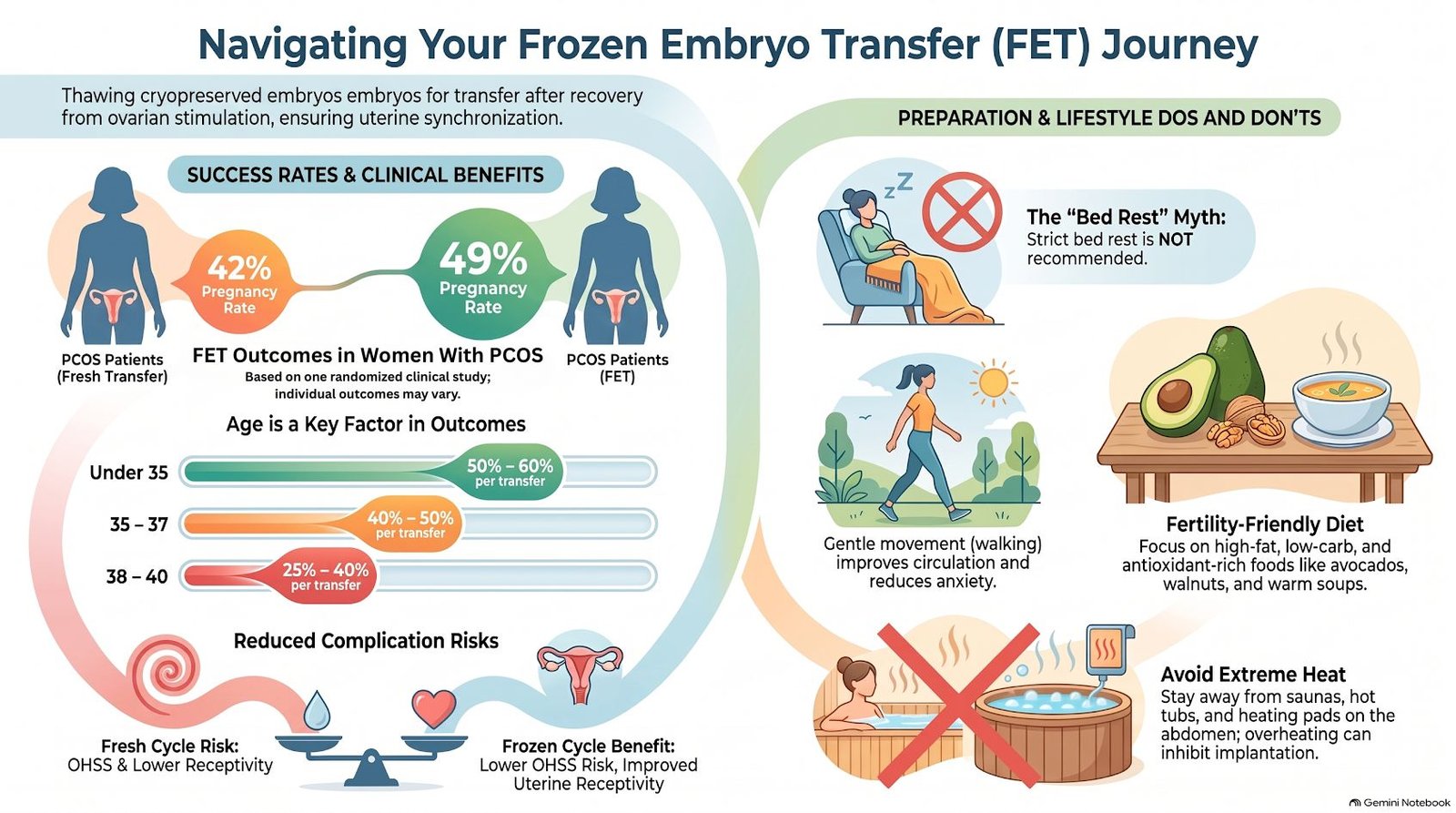
Not all embryos created during an IVF procedure have to be used immediately. They can be frozen for transfer in future depending on the conditions of uterus and hormonal levels, by a method known as the freezing of embryos for frozen embryo transfer (FET). FETs are now common practice in fertility treatments and provide patients more flexibility in planning their embryo transfers.
Frozen blastocyst transfer is nothing but the thawing of an already frozen embryo and transferring it into the uterus at the perfect time. It’s usually a minor process as compared to a full IVF cycle since egg retrieval isn’t repeated.
Knowing how FET actually works and what affects the outcome helps you to have a more informed conversation with your fertility specialist.
What Is Frozen Embryo Transfer?
The definition of “frozen embryo transfer” is the process whereby the embryo resulting from an IVF process conducted earlier is frozen and then thawed and transferred to the uterus.
Embryos may be frozen at various stages of development, but it is recommended that the embryos should be frozen on either their fifth or sixth day of development; that is known as blastocyst stage.
Here’s the basic flow:
- Eggs collected and fertilised
- Embryos grow in the lab
- Healthy embryos frozen
- Endometrium is prepared
- Embryo thawed and transferred
Every step exists to give the embryo the best possible chance to implant.
Fresh Embryo vs Frozen Embryo Transfer
Both are recognised, established options. Which one suits you depends on your hormones, embryo quality, and overall treatment plan.
Fresh embryo transfer works well when:
- Hormone levels look right
- Uterine lining is ready
- No medical reason to wait
- Doctor sees a favourable cycle
Frozen embryo transfer works well when:
- Body needs recovery time
- Lining needs more preparation
- Timing needs flexibility
- Embryo testing is planned
Neither is “better” in every case. A skilled IVF Doctor looks at your specific situation before recommending one path over the other.
Step-by-Step Frozen Embryo Transfer Process
Consultation and Planning
Your doctor reviews your last IVF cycle, embryo quality, and medical history. Some tests may follow, covering:
- Hormone levels
- Uterine health
- Endometrial thickness
- Cycle regularity
From there, the doctor decides between a natural cycle or a medicated one.
Preparing the Uterine Lining
The endometrium needs to be at the right thickness before transfer. Doctors track this through ultrasound and may prescribe estrogen to help it grow. Once ready, progesterone is added to prepare it for implantation.
Timing here matters a lot, especially for a frozen blastocyst transfer.
Thawing the Embryo
Freezing techniques have improved enormously over the years. On transfer day, the embryology team thaws the selected embryo and that embryo is transferred under ultrasound guidance into the uterus.
The Transfer Itself
A thin embryo transfer catheter is used to place the embryo in the uterus. No surgery, no Anaesthesia — many patients say it feels similar to a routine Gynaecological check-up.
Pregnancy Test
After 15 days, a blood test is done to determine whether the implantation took place successfully. One should not take tests before time but should continue taking medications as prescribed.
When Do Doctors Recommend Frozen Embryo Transfer?
FET isn’t a fallback option; it’s often the smarter, planned choice:
- Extra healthy embryos exist
- The lining wasn’t ready earlier
- Hormones need time to settle
- Genetic testing is being done
- Pregnancy is to be delayed
- Previous transfer didn’t work
- The doctor wants to postpone medically
For instance, a patient going through IVF in Ahmedabad might complete egg retrieval, freeze the embryos, and come back for transfer once the body and uterus are in a better place.
Benefits of Frozen Embryo Transfer
More flexibility — no need to repeat egg retrieval for every attempt.
Better planning — embryo development and uterine preparation are handled as separate stages, not forced into one cycle.
Embryos in reserve — extra embryos from one IVF cycle can be used later without starting from scratch.
Time to recover — the body gets a break before the next transfer attempt.
Talking to a Best IVF Doctor in Gujarat can help you understand which of these benefits actually apply to your case.
Factors Affecting Frozen Embryo Transfer Success Rate
No one can promise a pregnancy — but several things do influence the odds:
- Embryo quality – how well it developed and reached blastocyst stage
- Age – particularly the age when the eggs were originally collected
- Uterine lining – needs to be at the right stage for implantation
- Timing – embryo transfer must line up with the lining’s readiness
- Lifestyle – smoking, poor sleep, and certain medical and health conditions can all play a role
Following your doctor’s advice closely, before and after transfer, genuinely makes a difference.
Practical Tips Before a Frozen Blastocyst Transfer
- Take medicines on schedule
- Don’t skip scan appointments
- Eat a balanced diet
- Avoid smoking and alcohol
- Prioritise good sleep
- Discuss supplements with your doctor
- Avoid sudden medication changes
- Ask before resuming exercise
Skip the online forums and social media advice; every IVF journey is different.
Common Mistakes to Avoid During FET Treatment
Stopping medication by own is always to be avoided. Hormonal medicines should only be changed under medical guidance.
Comparing your timeline to someone else’s IVF journey is to be avoided always , as each body is different.
Complete bed rest isn’t proven to improve implantation either. Stick to the activity guidance your doctor gives you.
Most importantly don’t miss monitoring appointments; timing is central to a successful FET cycle.
Choosing the Right IVF Specialist
FET needs smooth coordination between your specialist, the embryology lab, and you. When picking an IVF Doctor in Gujarat or Best IVF Doctor in Ahmedabad, look for:
- Strong fertility experience
- Clear treatment explanations
- Personalised planning
- Embryology Lab standards
- Honest outcome discussions
- Reliable follow-up care
You should always feel comfortable asking questions about freezing, thawing, and transfer timing.
FAQs About Frozen Embryo Transfer
- What is frozen embryo transfer?
This is a method which is performed during In-Vitro Fertilisation process, where the frozen embryo is thawed and transferred.
- Is there any difference between frozen blastocyst transfer and a fresh transfer?
Yes, this is because the transfer process involves an embryo that has been frozen in its blastocyst stage.
- How long is the process for FET?
It all depends on whether it is a natural cycle or a medicated cycle, and it may take upto 15- 18 days to prepare the lining as per the case.
- What factors impact the success rate of the frozen embryo transfer procedure?
Some of the factors include embryo quality, Female age, receptivity of endometrium, timing, and general health, among others.
- Whom should I contact for FET in Gujarat?
Qualified infertility specialist or IVF doctor of Ahmedabad who will examine your medical history and Quality of embryos to develop a customised plan.
Conclusion
A frozen embryo transfer is one such procedure that is one of the most significant step in your IVF process. Frozen embryo transfer gives you a true chance of pregnancy without having to go through another egg extraction process. Everything from lining preparations to the timings of transfers will have to be thought out carefully.
If you’re considering starting IVF treatment or FET process, contact a fertility expert who can guide you in making the right decisions for yourself. For expert advise, book an appointment with Dr Jayesh Amin IVF.