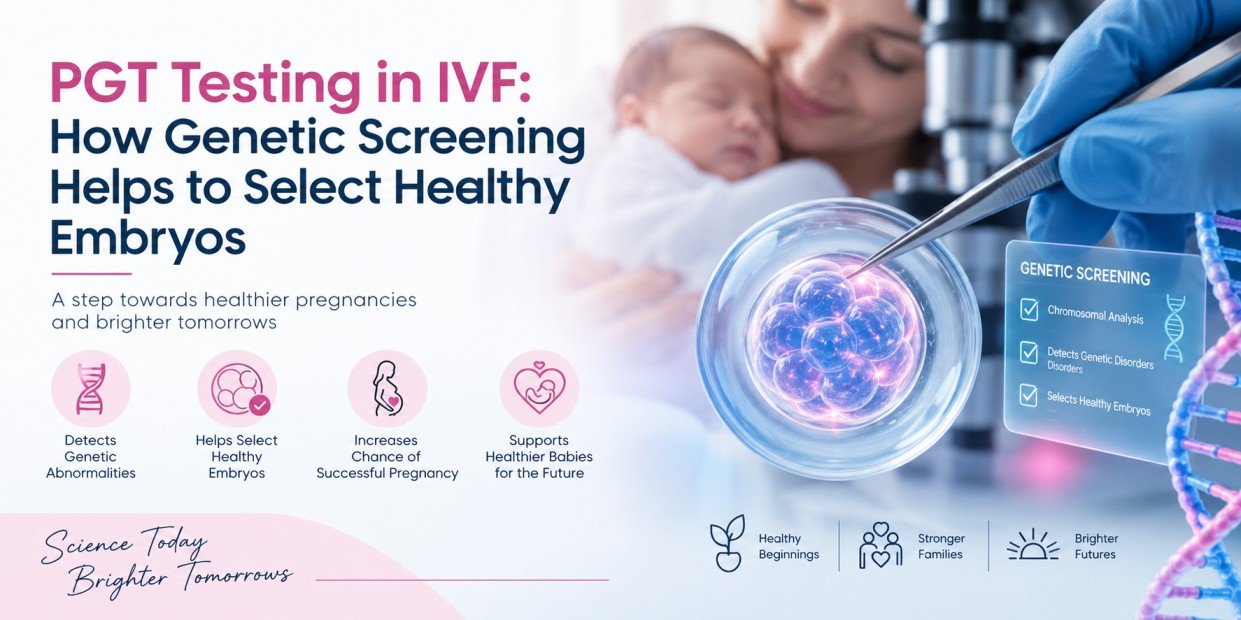
For couples opting for in vitro fertilisation, embryo creation is one step that needs to be taken. The second question is which embryo has the greatest possibility of growing into a healthy pregnancy? Preimplantation genetic screening and other preimplantation genetic testing (PGT) could help in this regard.
Preimplantation genetic testing enables Fertility experts to analyse the genetic or chromosomal composition of embryos before choosing one of them for further development. Some chromosomal abnormalities as well as genetic diseases could be detected during the process. However, preimplantation genetic testing does not guarantee a healthy child and is not always necessary for the all.
The knowledge of correct indication for using genetic testing becomes necessary for couples , carrying genetic diseases or multiple IVF failures undergoing IVF in Gujarat could be quite helpful.
What Is PGT in IVF?
Preimplantation genetic testing (PGT) involves a genetic test that screens embryos for any genetic or chromosomal error prior to embryo transfers.
Usually, the embryos are grown until they develop into blastocysts in the laboratory. Afterward, cells are retrieved from the outer layer of embryo, and the embryo is cryopreserved until the results become available.
Various kinds of PGT may be conducted, based on the indication and genetic health of the would be parents. The three broad forms of PGT include PGT-A, PGT-M, and PGT-SR.
It is worth noting that PGT cannot test all genetic conditions. A positive outcome that confirms a healthy embryo ; does not mean the mother will have no pregnancy risks.
Understanding the Three Types of PGT
1. PGT-A: Testing for Chromosomal Abnormalities
PGT-A is known as preimplantation genetic testing for aneuploidy. It checks for an abnormal number of chromosomes in the embryo.
Chromosomal abnormalities have an impact on the ability of the embryo to implant and could be one of the reasons for pregnancy failure. PGT-A helps find chromosomally favourable embryos for transfer.
PGT-A is not an automatic recommendation for everyone who is going for in vitro fertilisation (IVF). It is currently not considered to be a universally applicable screening test for all IVF cases, it has to be used selectively.
2. PGT-M: Testing for Single-Gene Disorders
PGT-M is done where there is a risk of transmitting a certain monogenic or single-gene disorder.
This test might be done if one or both partners have a genetic disorder or if there is an inherited genetic disorder in their family.
These disorders may be inborn blood disorders and other monogenic diseases. Genetic counselling forms an essential step in determining the need for PGT-M.
3. PGT-SR: Testing for Structural Chromosome Changes
PGT-SR is a test for couples where one partner has a structural chromosomal rearrangement, which may include balanced translocation.
Even though the partner carrying the abnormality might be physically normal, it can lead to an unbalanced chromosomal composition in embryo. PGT-SR may assist in detecting the embryos without the unbalanced rearrangement.
Who May Benefit From Genetic Testing During IVF?
PGT is not a routine requirement for every IVF patient. Your fertility specialist may consider genetic testing based on your medical and reproductive history.
It may be discussed in situations such as:
- Repeated IVF failures
- Recurrent pregnancy loss
- A known inherited genetic disorder in the family
- One partner carrying a known genetic condition
- A known structural chromosomal rearrangement
- Certain situations involving increased reproductive risk due to parental age
- Previous pregnancy or child affected by a genetic or chromosomal condition
The appropriate test depends on the underlying concern. A detailed fertility assessment and, where appropriate, genetic counselling should come before choosing PGT.
How Can PGT Relate to Miscarriage and Implantation Failure?
Abnormality in the number of chromosomes is one of the major causes of miscarriages. Embryos having abnormalities in chromosome number have decreased chances of successful implantation.
That is the reason PGT-A testing might be a suitable choice in selected cases of IVF. Through the process of PGT-A, doctors are able to avoid embryos which have specific types of abnormalities and may lead to increased risk of misscarriages.
Nevertheless, it is not correct to claim that the PGT-A technique is able to ensure implantation. PGT also cannot identify every reason an embryo may fail to implant. Uterine factors, endometrial receptivity, embryo development, sperm and egg quality, maternal health and other factors can influence IVF outcomes.
What PGT Can and Can’t Do
Used in the right situation, PGT offers real advantages:
- Flags embryos with tested abnormalities
- Reduces attempt of transferring affected embryo
- Useful for known inherited disorders
- Supports more personalised transfer plans
- Adds genetic clarity before pregnancy
But it has its limitations as well. All embryos may not reach the biopsy stage, some outcomes may be ambiguous or mosaic.
PGT and the Law in India
IVF and genetic testing procedures in India are conducted under the assisted reproductive technology guidelines “ The Assisted Reproductive Technology (Regulation) Act, 2021”. It makes sense to consult an IVF specialist on:
- Why is PGT recommended here?
- Which type applies to your case?
- What exactly does it detect?
- How are inconclusive results handled?
- Do we need genetic counselling?
- What’s the added cost involved?
- How will results affect transfer decisions?
It assists couples in understanding the need for testing rather than opting for testing just because it is a modern technique in IVF.
Final Takeaway
The preimplantation genetic testing (PGT) procedure can provide helpful information on a embryo’s genetic profile in IVF treatment, especially when there exists a possibility that hereditery or chromosomal errors might affect the outcome. Different types of PGT tests have different uses, so it will depend on the patient’s unique situation, which is appropriate for them.
For individuals interested in having an IVF treatment and wondering whether genetic testing would be useful, one needs to seek advice from an expert rather than depending on the generalised information available regarding this procedure. For people who need an IVF doctor in Gujarat or an IVF doctor in Ahmedabad, then Dr Jayesh Amin could assist them in making the right decision regarding their individual situation.
Frequently Asked Questions
- What is preimplantation genetic screening?
Preimplantation genetic screening is the traditional name often used for chromosome screening of IVF embryos. Today, the technical term known as PGT-A is normally applied in embryo aneuploidy screening.
- Is PGT guarantee of having a healthy baby?
No, PGT tests certain genetic or chromosomal traits and does not protect against all diseases and complications.
- Is PGT-A needed for all IVF patients?
No. The current scientific evidence does not recommend PGT-A for all IVF patients. You should consult your reproductive doctor to see if there are any specific advantages from PGT-A for your situation.
- Can PGT help in cases of recurrent miscarriages?
It can be taken into account in some patients, especially those who have been found to have chromosomal anomalies. But again, there is no certain evidence for this.
- Is PGT legal in India?
The procedures that are associated with PGT are controlled within the framework of India’s assisted reproductive technology law. Sex selection is banned.