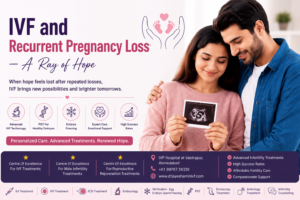
Recurrent Implantation Failure (RIF) is one of the most emotionally and clinically draining situation in ART. For couples undergoing IVF, the transfer of a good-quality Euploid embryo brings hope, even after that when implantation repeatedly fails despite everything looking normal and optimal treatment, it needs deeper evaluation and evidence-based management.
As a fertility specialist having 25 years of experience , I often see patients who have undergone multiple IVF cycles without success, and understanding RIF thoroughly helps in counselling and tailoring personalized treatment protocols for such couples.
Recurrent Implantation Failure generally refers to the failure to achieve a clinical pregnancy after the transfer of good-quality euploid embryo in multiple IVF cycles. Although definitions vary, RIF is commonly understood as
Failure after 2–3 euploid embryo transfers or transfer of at least 3–4 good-quality embryos in women usually below 35-38 years of age.
However, modern reproductive medicine emphasizes individualized assessment rather than a rigid definition because we believe that one size does fit for all and story of every couple is unique.
Now when couples ask Why Does Implantation Fail? So it can be understood as Implantation is a complex interaction between a healthy embryo, a receptive endometrium, proper hormonal synchronization and Immune and molecular balance. Failure may occur due to issues in any of these areas.
1. Embryo-Related Causes- Embryonic factors account for the majority of implantation failures like Chromosomal abnormalities (aneuploidy), Even good-looking embryos may be genetically abnormal. Poor embryo quality due to Advanced maternal age and high Sperm DNA fragmentation also leads to this situation.
Preimplantation Genetic Testing for Aneuploidy (PGT-A) can help in selection of chromosomally normal embryos, especially in women above 35 years.
2. Endometrial Factors- even a perfect embryo cannot implant if the uterine lining is not receptive. Common endometrial causes include Thin endometrium, Displaced window of implantation, Chronic endometritis, Uterine polyps, Fibroids distorting the cavity, Adenomyosis
and Intrauterine adhesions etc.
Advanced tests like Endometrial Receptivity Analysis (ERA) may help identify personalized embryo transfer timing in selected patients. Immunological and Thrombophilic Factors also play crucial roles. In some women, immune imbalance or clotting disorders may interfere with implantation.
Possible contributors may be Antiphospholipid syndrome, Elevated natural killer (NK) cell activity, Autoimmune conditions like Thrombophilia.
Treatment may include low-dose aspirin, heparin, or immunomodulatory therapy in selected, evidence-supported cases.
3. Hormonal Imbalance- Inadequate progesterone support, Thyroid disorders, Hyperprolactinemia, Poor luteal phase support may be the reasons for implantation failure.
Therefore proper hormonal optimization is crucial before embryo transfer.